ThermoVolt stores electricity as heat in locally manufactured refractory ceramics — from 12 kWh residential geysers to multi-MWh industrial process-heat batteries.
ThermoVolt stores renewable electricity as high‑temperature heat and delivers it directly as useful heat. It is not an electricity "power bank" — it is built for the dominant end‑use in Pakistan and industry worldwide: hot water, space heating, and process heat.
ThermoVolt stores electricity as heat with near‑100% electricity‑to‑heat conversion in the heating elements (resistive). The source doesn't matter — what matters is charging when electricity is abundant and releasing heat when it is needed. No inverter is required for the heating elements, and there is no electrochemical capacity fade in the ceramic core.
ThermoVolt is built on two distinct ceramic technologies — each chosen for its specific role, both sourced and manufactured entirely within Pakistan.
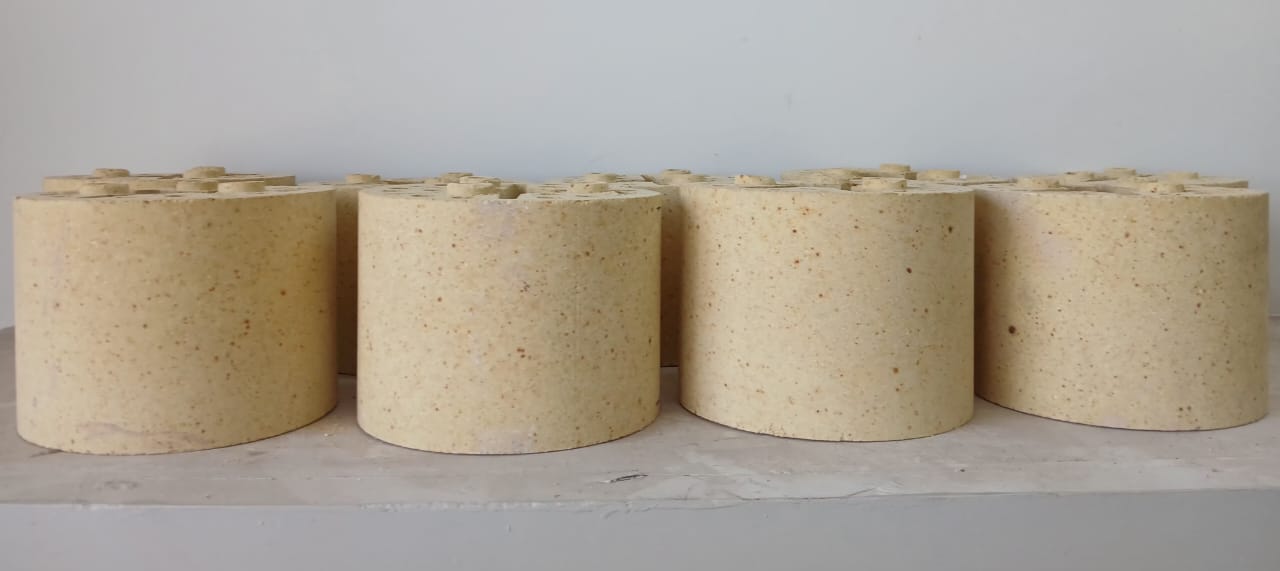
Aluminium comprises ~8% of Earth's crust (by mass), mostly as aluminium-bearing minerals that support alumina-based refractories. For storage, alumina wins on the physics of scale: high density combined with high solid heat capacity delivers strong energy density in a simple, durable material that is abundant and geopolitically de-risked.
As an air-stable oxide ceramic, alumina refractories are engineered for furnace duty and long service life under thermal cycling. The ceramic core is designed for decades (target ~30 years); heaters and sensors are service parts.
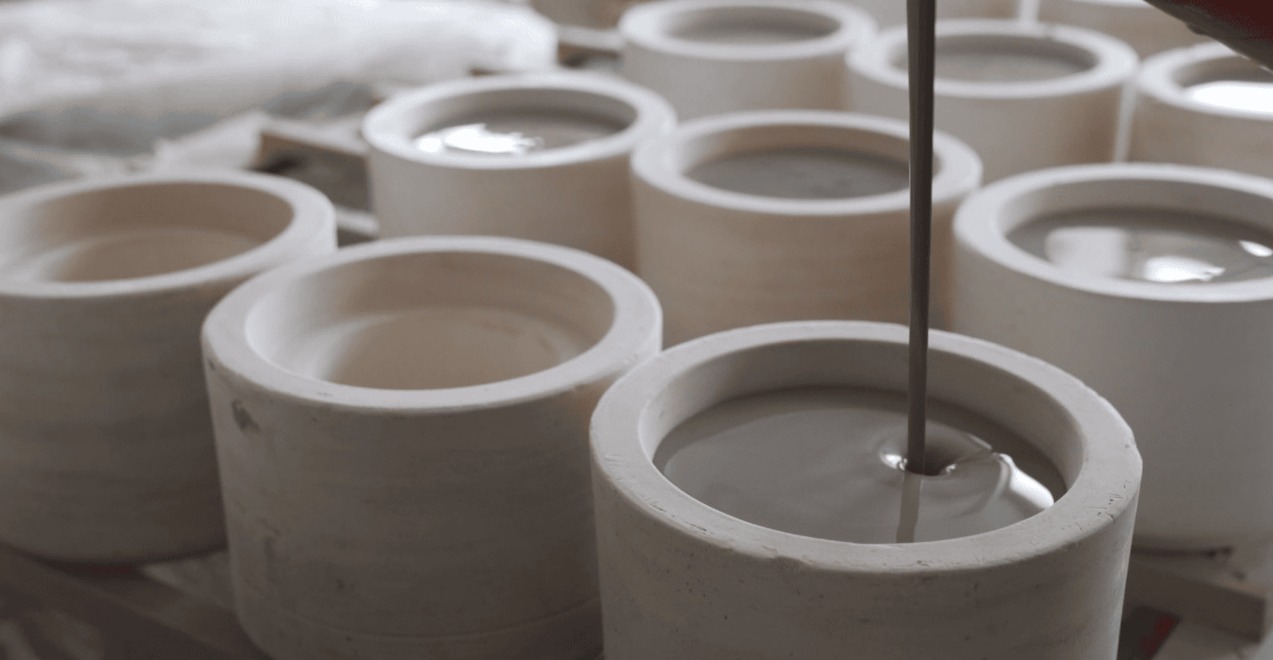
For manifolds, mixers, valve modules, and flow channels, we use specialised engineering ceramics chosen for manufacturability and thermal cycling performance. They can be formed into complex geometries, hold tight tolerances, and handle repeated expansion/contraction with excellent dimensional stability.
Both material families are local, affordable, proven in kilns and furnaces for centuries, and recyclable at end of life.
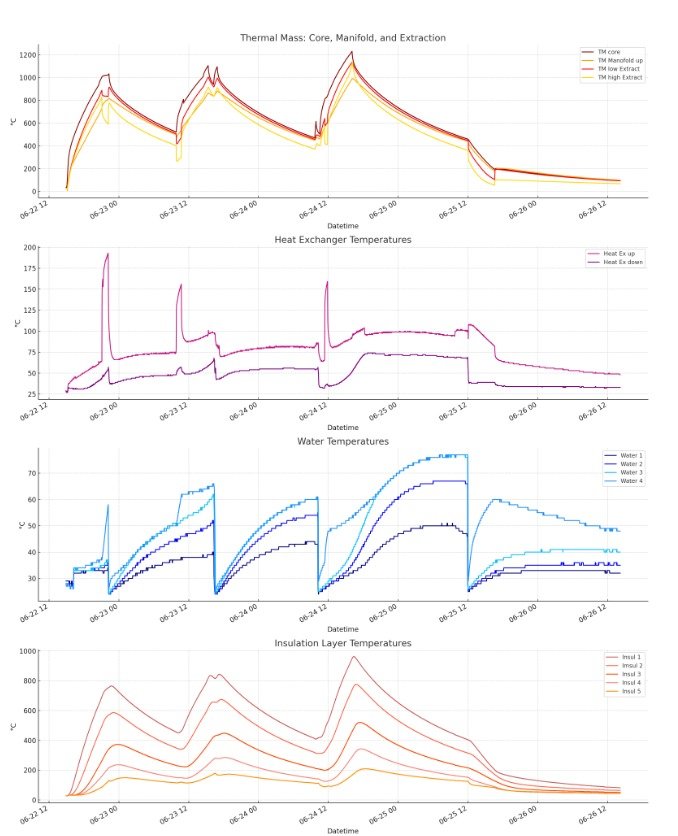
Our first commercial prototype is the ThermoVolt 12 kWh residential geyser (Beta V5): a 100‑liter unit designed to deliver roughly 300 liters/day of ~60°C hot water, with multi‑day retention from a single charge under typical household draw patterns. This model is currently being piloted with support from Swiss REPIC as our first funded field deployment.
ThermoVolt is designed for domestic hot-water service: typical operation stays below 90°C at the water side, with passive and electronic safeguards. The ceramic core does not "capacity‑fade" like electrochemical batteries; routine service focuses on accessible wear parts.
The ThermoVolt controller monitors household electricity, PV output, and grid tariffs in real time — routing surplus energy into the thermal battery at precisely the moments when it would otherwise be wasted or cheapest.
As Pakistan's grid moves toward 60% renewables by 2030, dynamic tariffs will make this intelligence increasingly valuable. The controller is the bridge between Pakistan's evolving electricity market and the thermal battery at its core.
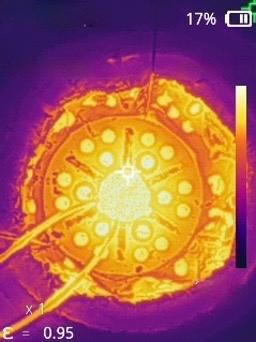
Every product shares the same alumina refractory core, manufactured on the same line at Ismail Ceramics. Starting with residential, proving the technology, scaling upward.
Pakistan's industrial sector burns imported gas for heat it could store from solar. ThermoVolt replaces the burner — not the factory. Four prominent examples below; the platform extends equally to agro-processing, grain and timber drying, glass, cement, chemicals, and more.
Gas-fired stenters cause burner soot, fabric yellowing, and export rejects. ThermoVolt supplies combustion-free hot air across drying and heat-setting lines — eliminating a direct quality and compliance liability for Pakistan's largest export sector.
The 400–800 °C gas-fired pre-heat zone produces up to 90% of total scale loss in re-rolling furnaces. ThermoVolt injects combustion-free hot air into the cold end of tunnel furnaces, eliminating oxidation through the most destructive temperature band.
Pakistan's bull's trench brick kilns and ceramic tunnel kilns burn coal and waste fuels continuously. ThermoVolt modules inject clean high-temperature air into pre-heat and firing zones without full kiln replacement — enabling emissions compliance, reduced fuel cost, and low-carbon product certification. iTerra operates inside Pakistan's leading refractory ceramics manufacturer.
Gas-fired boilers are the largest and most volatile OPEX item across Pakistani industry. ThermoVolt displaces the burner while leaving existing steam distribution networks unchanged. Solar-charged steam — fuel-free, price-stable, zero combustion emissions.
Pakistan is in the midst of an unplanned solar revolution — 18 million rooftop systems installed not because of incentives, but because grid electricity became unaffordable. Renewables now supply 53% of electricity, with a target of 60% by 2030.
The result is a massive, stranded solar asset and an emerging dynamic tariff environment. Meanwhile, households and SMEs continue burning imported LPG and gas for water heating and cooking — the dominant energy end-uses.
When the end use is heat, the optimal storage medium is heat. Pakistan doesn't need lithium, cobalt, or nickel. It needs clay, alumina, and wire — all domestic, all affordable, all available now.
Global thermal storage leaders target utility-scale plants in developed markets. iTerra targets the segment nobody else is designing for: Pakistan's 18 million solar households and hundreds of thousands of SMEs.
| Company | Scale | Temperature | Target Market | Manufacturing |
|---|---|---|---|---|
| Rondo Energy | 10–100+ MWh | ~1,200°C | US/EU heavy industry | US factory |
| Antora Energy | 10–100+ MWh | 1,500–2,400°C | US industry + grid | US factory |
| MGA Thermal | 5–100+ MWh | ~650°C | AU/EU power stations | Australia |
| iTerra ThermoVolt | 12 kWh – 10 MWh | 1,000°C | Pakistan SMEs & households | Gujranwala, Pakistan |
Appropriate technology must be manufactured where it is deployed — using local materials, local skills, and local industry.
info@iterra.ch · Dr. Reto Stocker
Get in Touch